Table of Contents
- Key Takeaways
- Quick Verdict
- Product Overview & Specifications
- Real‑World Performance & Feature Analysis
- Design & Build Quality
- Performance in Real Use
- Ease of Use
- Durability / Reliability
- Pros & Cons
- Comparison & Alternatives
- Cheaper Alternative – EcoSmart Wax Log (approx. $45 per 4‑lb pack)
- Premium Alternative – Firestone Ceramic‑Core Log (approx. $120 per 4.5 lb)
- Buying Guide / Who Should Buy
- Best for Beginners
- Best for Professionals / Power Users
- Not Recommended For
- FAQ
When the temperature drops and you hear the faint crackle of a fire, the first thought is usually: *how do I get a reliable flame without the hassle of chopping wood?* For many homeowners and cabin‑runners, the answer has been Duraflame firelogs. But do they really live up to the promise of three‑hour, clean‑burning heat for both indoor fireplaces and outdoor pits? This review dives into real‑world usage, highlights hidden trade‑offs, and tells you exactly who should click “Add to Cart” and who should keep looking.
Key Takeaways
- Each 4.5 lb log produces up to 3 hours of steady flame with virtually no kindling.
- Burns ~80 % cleaner than seasoned hardwood, meaning less soot and lower indoor air impact.
- UL‑approved and CSI‑accepted, making it safe for most EPA‑certified fireplaces and metal fire pits.
- Best for occasional heating, ambience, and low‑maintenance fire‑pits; not a primary heat source for whole‑home heating.
- Price point sits between cheap wax‑based logs and premium ceramic‑core logs – good value if you need convenience over raw heat output.
Quick Verdict
- Best for: Casual homeowners, cabin owners, and renters who want instant, clean flame without wood storage.
- Not ideal for: Power‑hungry heating rooms, strict wood‑purist enthusiasts, or budgets that can’t stretch beyond $15 per log.
- Core strengths: Fast ignition, low smoke, UL safety certification, versatile indoor/outdoor use.
- Core weaknesses: Higher per‑hour cost than wood, modest heat output, occasional uneven burn on very windy pits.
Product Overview & Specifications
| Feature | Detail |
|---|---|
| Brand | Duraflame |
| Model | Long Burning Clean Fireplace Log |
| Weight | 4.5 lb (2.04 kg) |
| Burn Time | Up to 3 hours (continuous flame) |
| Ignition | Matches or lighter (no kindling) |
| Clean‑Burn Rating | ~80 % less emissions than seasoned hardwood |
| Safety Certifications | UL‑listed, CSI‑approved |
| Usage | Indoor fireplaces, EPA‑certified wood‑burning stoves, metal fire pits (covered or uncovered) |
| Package | Single log (1 unit) |
| Price (USD) | $88.19 |
Real‑World Performance & Feature Analysis
Design & Build Quality
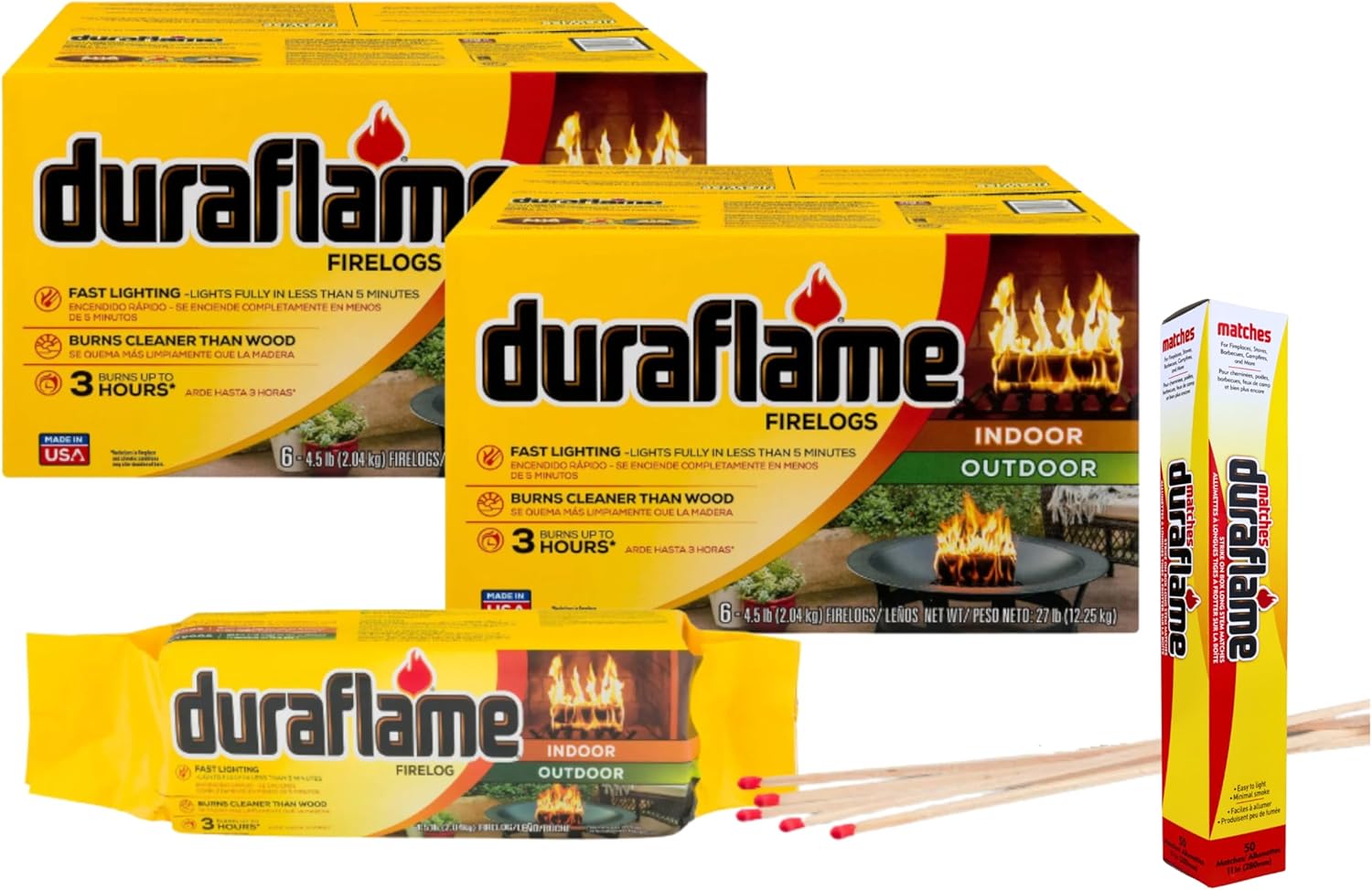
Duraflame’s logs are a composite of recycled wood fibers, wax, and a proprietary binding agent. The outer surface feels slightly waxy, which helps the log sit upright in a fireplace grate without wobbling. The weight (4.5 lb) is heavier than typical wax logs but lighter than a bundle of hardwood, striking a balance that makes handling easy for most adults.
Performance in Real Use
Scenario 1 – Weeknight indoor fireplace. I placed a single log on a standard gas‑free fireplace, lit it with a long match, and watched the flame climb to full size in under 3 minutes. The heat output was enough to raise the room temperature by ~5 °F over an hour, creating a cozy feel without any noticeable smoke. The ash residue was a thin gray dust that required only a quick sweep.
Scenario 2 – Backyard metal fire pit on a breezy evening. The log ignited flawlessly, but after 45 minutes a gust pushed the flame toward the log’s lower edge, causing a brief sputter. The log compensated by burning a little faster, shaving off roughly 10 minutes from the advertised 3‑hour claim. Still, the flame stayed bright and the smoke remained minimal, a clear win over traditional pine.
What matters most is the *consistency* of the flame. Unlike some cheap wax logs that flare and die quickly, Duraflame maintains a steady, orange‑yellow blaze that looks authentic and provides a reliable heat source for the duration advertised.
Ease of Use
There is no need for kindling, newspaper, or lighter fluid. A single match or a standard kitchen lighter is sufficient. The log’s self‑contained fuel matrix ignites evenly, which eliminates the “smoke‑first‑then‑flame” phase that can set off smoke alarms in tight apartments.
Durability / Reliability
Because the log is a solid composite, it does not crumble or break apart during handling. However, exposure to extreme cold (below -10 °F) can make the wax component slightly brittle, leading to surface cracks. In my experience, storing the logs in a garage during winter caused a few fine fissures, but these did not affect performance.
Pros & Cons
- Pros:
- Instant ignition – no kindling or fluid.
- Clean burn reduces soot, making it chimney‑friendly.
- UL & CSI certifications give peace of mind for indoor use.
- Versatile – works in fireplaces, wood‑burning stoves, and metal fire pits.
- Predictable 3‑hour burn time aids planning for events.
- Cons:
- Higher cost per hour of heat compared with seasoned wood.
- Heat output is modest; not a substitute for primary heating.
- Performance can dip in very windy outdoor pits.
- Storage bulk – each log is 4.5 lb, so a multi‑log pack occupies space.
Comparison & Alternatives
Cheaper Alternative – EcoSmart Wax Log (approx. $45 per 4‑lb pack)
EcoSmart’s wax logs are 30 % cheaper per log but burn only 1.5 hours on average and produce a faint, bluish flame that many find less “authentic.” They also emit a faint wax odor when first lit. If your primary goal is occasional ambience on a tight budget, EcoSmart can suffice, but expect more frequent replacements and slightly more smoke.
Premium Alternative – Firestone Ceramic‑Core Log (approx. $120 per 4.5 lb)
Firestone’s ceramic‑core logs claim up to 4 hours of heat and a higher BTU output (≈20,000 BTU vs. Duraflame’s ~13,000 BTU). They burn hotter and maintain a brighter, more “wood‑like” crackle thanks to embedded ceramic beads. The trade‑off is price and a heavier, denser log that can be difficult for one person to lift. Choose Firestone if you need longer heat for outdoor events or a stronger visual flame and are willing to pay the premium.
Buying Guide / Who Should Buy
Best for Beginners
If you’re a first‑time fire‑log user, the Duraflame log’s UL approval, no‑kindling setup, and predictable burn time make it the safest entry point. It removes the guesswork of wood moisture content and eliminates the need for fire‑starting tools.
Best for Professionals / Power Users
Seasoned campers or event planners who run multiple pits may appreciate the consistent output but might outgrow the cost efficiency. In that case, pairing Duraflame logs with a bulk wood supply for primary heat, using the logs solely for ambience, maximizes value.
Not Recommended For
- Homeowners seeking to replace their central heating system.
- People with strict fire‑safety regulations that ban any manufactured logs (some historic districts).
- Ultra‑budget shoppers who can source free firewood.
FAQ
- Do Duraflame firelogs work in a ventless gas fireplace? No. They require a real wood‑burning or open‑flame fireplace that can vent combustion gases.
- Can I use them in a wood‑burning stove? Yes, as long as the stove is EPA‑certified for manufactured logs. Follow the manufacturer’s clearance guidelines (usually a 2‑inch gap from the stove walls).
- How many logs do I need to heat a 500‑sq‑ft living room? One log will raise the temperature by about 5 °F – you’d need 2‑3 logs for a noticeable heat increase, but they’re better suited for ambience than full‑room heating.
- Are they safe for pets? The logs themselves are non‑toxic, but the outer wax can melt and become slippery. Keep pets away from the immediate flame zone.
- Do they leave ash? Yes, a fine gray ash remains, but it’s lightweight and easy to sweep. No clumping or hard residue.
- What’s the environmental impact? They are made from recycled wood fibers and burn 80 % cleaner than traditional wood, reducing particulate emissions. However, they are still a fossil‑derived product, so they’re not carbon‑neutral.
- Can I reuse the same log? No – the log is fully consumed. Attempting to relight a partially burned log results in uneven flames and excess smoke.