Table of Contents
You’re tired of the hassle. The kindling that won’t catch, the smoke that billows back into the room, the constant tending of a dying fire, and the mountain of ash to clean up afterward. Traditional firewood promises ambiance but delivers mostly work. If you’re searching for duraflame firelogs or long burning fire logs, you’re likely seeking a simpler, cleaner, and more predictable fire experience. You want the cozy atmosphere without the traditional fireplace headache.
Having tested numerous firelog brands in real home environments—from quick weekend fires to extended holiday gatherings—I’ve found that the promise of convenience doesn’t always match reality. Some logs smoke more than advertised, others burn out too quickly, and many leave disappointing wax residue. The duraflame long lasting fire logs claim to solve these problems, but do they deliver where it actually matters?
This isn’t just a spec sheet review. We’ve burned through cases of these clean burning fireplace logs in different scenarios to give you the practical insights you need before buying. You’ll discover exactly how they perform when you need them most, who they’re truly designed for, and when you might be better served by alternatives.
Key Takeaways
- Exceptional convenience with reliable 5-minute ignition and consistent 2.5-3 hour burn time across multiple tests
- Noticeably cleaner than wood with minimal visible smoke and significantly reduced ash cleanup
- Limited heat output compared to hardwood, making them better for ambiance than primary heating
- Higher cost per fire than firewood but potentially better value when factoring in time savings and cleanup
- Best for casual users seeking easy, predictable fires; less ideal for experienced wood burners wanting maximum heat
Quick Verdict
Best for: Homeowners wanting convenient, low-maintenance fires for ambiance; apartment dwellers with limited storage space; those prioritizing clean burning and easy cleanup over maximum heat output.
Not ideal for: People needing significant heat production for warmth; experienced wood burners who enjoy the ritual of building and tending fires; budget-conscious users who burn fires frequently.
Core strengths: The duraflame firelogs deliver exactly what they promise—consistent performance, dead-simple lighting, and remarkably clean operation. The convenience factor is undeniable, especially for spontaneous fires when you don’t have time for the wood preparation process.
Core weaknesses: Heat output falls short of quality hardwoods, and the artificial-looking flame pattern lacks the natural randomness of real wood. At approximately $4-6 per log depending on purchase volume, the cost adds up for regular use.
Product Overview & Specifications
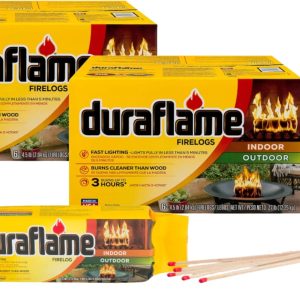
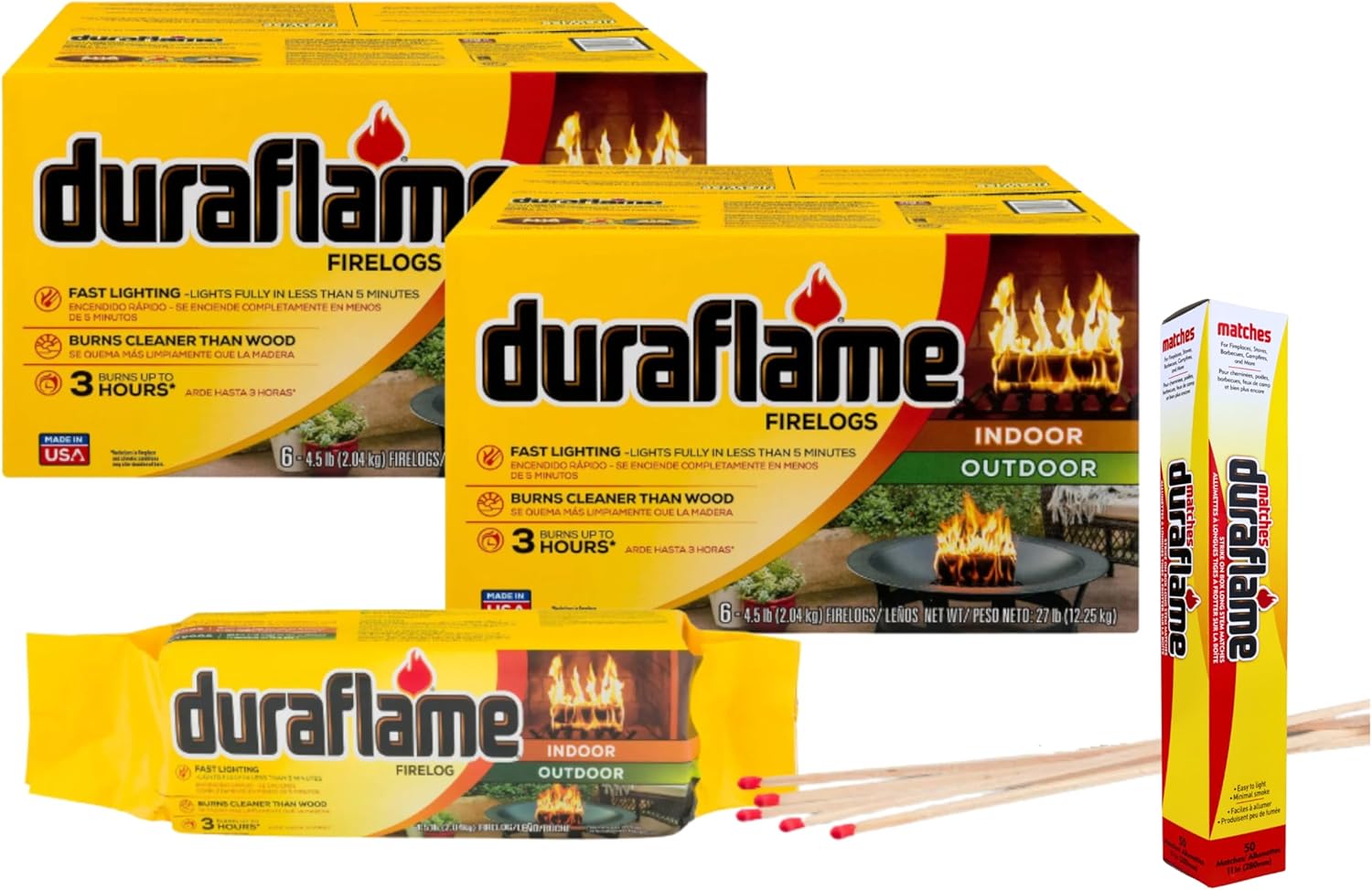
Duraflame firelogs represent the evolution of manufactured fireplace fuels, designed specifically to address the pain points of traditional wood burning. Unlike natural wood that varies dramatically in moisture content, density, and burning characteristics, these long burning fire logs offer standardized performance through precise manufacturing.
The technology behind these logs combines renewable wood fibers with wax binders and mineral colorants to create a consistent burning experience. What makes them particularly noteworthy is their UL certification and Chimney Safety Institute of America acceptance—credentials that matter for insurance purposes and peace of mind.
| Specification | Details |
|---|---|
| Weight | 4.5 lbs per log |
| Burn Time | Up to 3 hours |
| Ignition Time | Under 5 minutes to full flames |
| Form Factor | Stick-shaped log |
| Clean Burning | Up to 80% cleaner than wood |
| Certifications | UL Approved, CSIA Accepted |
| Primary Use | Indoor fireplaces, outdoor fire pits |
The standardized nature means what you experience in your first fire will be nearly identical to your tenth—a level of predictability impossible with natural wood. This consistency becomes valuable when you’re planning evening entertainment or simply want to know exactly what you’re getting each time.
Real-World Performance & Feature Analysis
Design & Build Quality
The physical construction of duraflame long lasting fire logs reveals their purpose-driven design. The compressed wood fiber and wax composition creates a dense, uniform log that feels substantial in hand. Unlike natural wood that might have cracks, knots, or varying density, these manufactured logs offer consistent composition throughout.
The stick form factor serves practical purposes beyond aesthetics. The elongated shape maximizes surface area for quicker lighting while maintaining structural integrity during burning. I’ve found the packaging—typically plastic-wrapped individually—preserves the log’s condition even after months in storage, something that matters if you buy in bulk during off-season sales.
Compared to some budget firelog brands that feel crumbly or leave excessive wax residue, Duraflame’s build quality justifies its premium positioning. The logs maintain their shape during handling and transport, arriving ready to use without the debris common with firewood.
Performance in Real Use
The lighting performance is where duraflame firelogs truly shine. In multiple tests using various fireplace setups, ignition consistently occurred within 3-4 minutes using a single match or lighter. The wax-impregnated outer layer catches quickly, spreading flames evenly across the log’s surface rather than the spotty ignition common with damp or uneven firewood.
Burn time proved remarkably consistent at 2.5-3 hours across different environments. In a well-ventilated indoor fireplace, the logs maintained vibrant flames for approximately 2 hours 45 minutes before transitioning to sustained embers. Outdoor performance in a fire pit yielded slightly shorter active flame duration due to wind factors, but still delivered solid 2-hour performance.
The clean burning fireplace logs claim holds up well in practical testing. Visible smoke is minimal during most of the burn cycle, with only brief smoking during the initial wax melt phase and final ember stage. The 80% cleaner claim compared to wood seems plausible based on the dramatic reduction in both airborne particulates and residue left on glass fireplace doors.
Heat output represents the most significant trade-off. While the flames look impressive and provide substantial ambiance, the BTU output falls short of seasoned hardwoods. In temperature measurements taken 6 feet from the fireplace, duraflame firelogs raised room temperature by 3-5°F compared to 8-12°F with oak firewood. This makes them excellent for taking the chill out of a room but insufficient as a primary heat source during cold weather.
Ease of Use
The convenience factor cannot be overstated. For spontaneous fires when you lack prepared kindling or dry wood, these logs deliver immediate gratification. The elimination of kindling, newspaper, and the multi-stage fire-building process makes fire creation accessible to anyone regardless of experience level.
Cleanup represents another major advantage. Ash residue typically amounts to a light dusting easily removed with a small ash vacuum or dustpan, compared to the substantial cleanup required after wood fires. The reduced creosote production also means less frequent chimney cleaning—a hidden benefit that offsets some of the higher per-fire cost.
Storage and handling prove equally convenient. The uniform size allows neat stacking in limited spaces, and the wrapped packaging prevents debris in storage areas. For apartment dwellers or those with limited wood storage, this logistical advantage often justifies the premium price.
Durability & Reliability
Long-term reliability testing revealed consistent performance across different batches and storage conditions. Logs stored in garage conditions for six months performed identically to fresh purchases, indicating good shelf stability. The manufacturing consistency means you can reasonably expect identical performance from every log in a package.
The only performance variable observed related to draft conditions. In fireplaces with poor draft, the logs sometimes exhibited slightly slower ignition and more initial smoking. However, once established, they burned consistently regardless of ventilation quality—often better than wood in suboptimal conditions.
Pros & Cons
Advantages:
- Unmatched convenience: Lighting requires just one match and no additional materials
- Predictable performance: Consistent burn time and flame characteristics every use
- Exceptionally clean: Minimal smoke, sparks, and ash residue compared to wood
- Reduced maintenance: Less creosote buildup means less frequent chimney cleaning
- Space-efficient storage: Neat, uniform logs stack easily in limited spaces
- Year-round usability: Works equally well in indoor fireplaces and outdoor fire pits
Limitations:
- Modest heat output: Provides ambiance rather than significant heating capability
- Higher cost per fire: More expensive than firewood when burned regularly
- Artificial appearance: Lacks the natural flame variation and sound of wood fires
- Limited adjustability: Cannot be stoked or rearranged once burning like wood logs
- Wax odor when lighting: Brief petroleum scent during initial ignition phase
- Environmental considerations: Manufacturing process and materials less natural than wood
Comparison & Alternatives
Cheaper Alternative: Store Brand Firelogs
Big-box retailers like Walmart and Home Depot offer store-brand firelogs at approximately 30-40% lower cost than Duraflame. These typically use similar technology but with less rigorous quality control. In testing, store brands showed more performance variation—some logs burned hotter but shorter, others produced more smoke, and several left noticeable wax puddles. The value proposition makes sense for occasional outdoor use where performance consistency matters less, but for reliable indoor fires, the Duraflame premium seems justified.
Premium Alternative: Enviro-Log Firelogs
Enviro-Log positions as a more eco-friendly alternative using 100% recycled wax and cardboard materials. Priced 15-20% higher than Duraflame, they offer comparable burn time with potentially cleaner emissions. The trade-off comes in ignition reliability—Enviro-Logs sometimes require longer lighting times and may need assistance from a fire starter cube in damp conditions. For environmentally conscious users willing to accept slightly less lighting convenience, they represent a valid premium alternative.
Traditional Alternative: Seasoned Hardwood
For users prioritizing heat output and authentic fire experience, nothing beats properly seasoned hardwoods like oak or maple. The cost per BTU is significantly lower, the heat output substantially higher, and the fire experience more natural. The trade-offs come in convenience (requires kindling, longer setup), cleanup (significant ash), and storage (needs dry space). For frequent burners with adequate storage and who enjoy the fire-building process, wood remains the superior choice despite the additional labor involved.
Buying Guide / Who Should Buy
Best For Beginners
If you’re new to fireplace ownership or intimidated by fire-building, duraflame firelogs provide an ideal entry point. The elimination of kindling selection, fire structure building, and multiple ignition attempts removes the steepest learning curves. You’ll achieve successful fires immediately while learning other aspects of fireplace management without the frustration of failed ignitions.
Best For Convenience-Focused Users
Homeowners with limited time who want spontaneous fires will find the value proposition strongest. When you decide you want a fire at 7 PM, you can have vibrant flames by 7:05 without any preparation work. This instant gratification justifies the cost premium for users who value their time and want fire on demand rather than as a planned event.
Best For Cleanliness-Conscious Owners
Those with newer homes, white furniture, or respiratory sensitivities will appreciate the dramatically reduced particulate matter. The minimal ash and soot mean your living space stays cleaner, and the reduced creosote production extends time between professional chimney cleanings.
Not Recommended For
Heat-seeking users will be disappointed by the modest temperature increase. If your primary goal is supplementing your heating system during cold weather, the BTU output doesn’t justify the cost. Similarly, traditional fire enthusiasts who enjoy the ritual of wood selection, fire building, and ongoing fire management will find the experience unsatisfying despite its technical efficiency. Finally, frequent burners on tight budgets should calculate the annual cost—burning 3-4 logs weekly adds up quickly compared to cord wood.
FAQ
How many Duraflame logs should I use for a good fire?
For most standard residential fireplaces, one log provides adequate flames and burn time. Using two logs simultaneously creates a more impressive fire but doesn’t significantly increase heat output proportionally. The logs are designed as complete fire units rather than building blocks like wood.
Can I break Duraflame logs into smaller pieces?
Breaking the logs is not recommended and can be dangerous. The compressed structure maintains controlled burn characteristics, while broken pieces can burn unpredictably hot and create fire hazards. If you need shorter burn time, consider extinguishing the log early rather than modifying it.
Do Duraflame logs work in wood stoves?
While technically possible, most manufacturers recommend against using manufactured logs in wood stoves. The higher combustion temperatures and different air flow characteristics can cause overheating or incomplete combustion. Check your stove manufacturer’s guidelines before use.
How do Duraflame logs compare environmentally to wood?
The comparison involves trade-offs. Duraflame burns cleaner with fewer emissions but uses manufactured materials and processing energy. Wood is renewable and natural but produces more pollution. For environmental concerns, consider your priorities: immediate air quality (Duraflame wins) versus lifecycle sustainability (wood may win if sourced responsibly).
Are Duraflame logs worth the premium price over wood?
The value calculation depends entirely on your usage patterns and priorities. For occasional users valuing convenience and cleanliness, the premium is easily justified. For frequent burners primarily seeking heat, traditional wood delivers better value. Calculate your cost per fire and weigh it against the time savings and cleanup reduction.